
Maintenance
5 Warning Signs Your Roof Needs Repair Before Winter
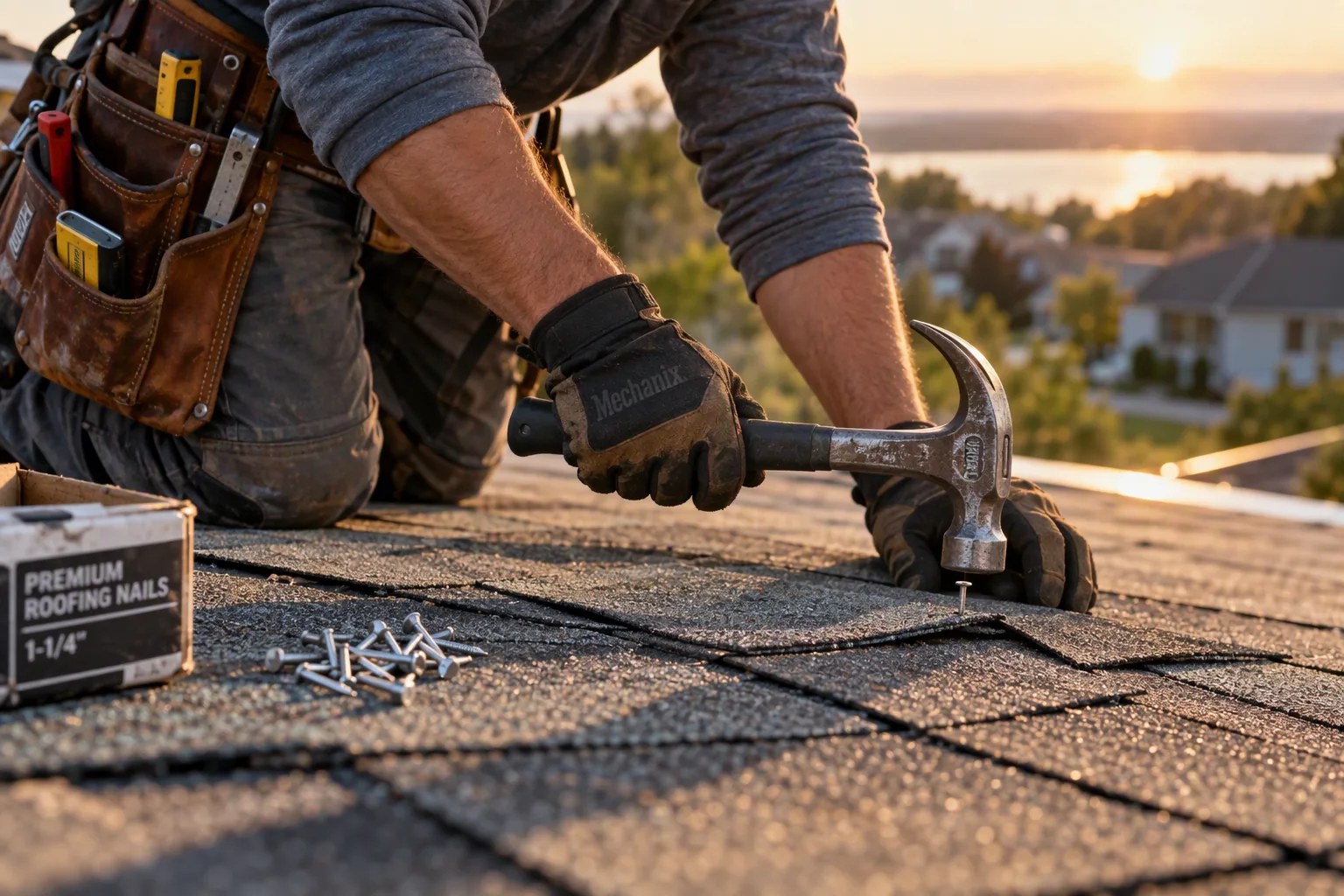
Autumn is the last comfortable window to repair a roof before winter. Once temperatures drop, freeze-thaw cycles work on every weakness: water enters a small gap, freezes, expands, and widens it a little more each night. By spring, a cracked pipe boot has become a saturated deck and a stained ceiling.
Here are five signs that mean you should book a repair now rather than wait for spring.
1. Granules collecting in your gutters
Asphalt shingles are covered in mineral granules that protect the asphalt beneath from UV. When you find a noticeable layer of grit at the bottom of your gutters, those granules are coming off your roof. A little is normal on an older roof; a lot means the shingles are ageing quickly and becoming brittle.
2. Curled, cracked or missing shingles
Walk the perimeter of your home and look up. Shingles that are curling at the edges, cracking, or missing entirely are the most visible sign of a roof in trouble. Missing shingles leave the underlayment exposed to the elements, and one windy night can turn a small gap into a large leak.
3. Stains or discolouration on ceilings and walls
Brown or yellow water stains on an upstairs ceiling almost always mean water is already inside the roof assembly. By the time a stain appears, the leak has usually been active for weeks. Do not paint over it — find and fix the source first.
4. Damaged or missing flashing
Flashing is the metal that seals the roof around chimneys, vents, valleys and walls. It is the single most common source of leaks. Lifted, rusted or poorly sealed flashing should be repaired immediately, because water funnels straight to it.
5. Sagging rooflines or a damp attic
A roof that visibly sags, or an attic that smells damp and shows dark staining on the roof boards, points to moisture and possibly structural deterioration. These are the problems that get dramatically more expensive the longer they are left.
Why autumn is the right time to act
Roofing work is faster, safer and less expensive in dry, moderate weather. Cold-weather repairs are possible — we use cold-application adhesives and take extra safety precautions — but they take longer and cost more. Getting ahead of the season is almost always the cheaper decision.
What to do next
If you recognise any of the signs above, do not climb onto the roof yourself. Wet, frosty shingles are dangerously slippery, and walking on them can cause exactly the damage you are trying to prevent. Book a professional inspection instead.
Roofex offers same-week inspections across the Kansas City metro. Request yours today and we will tell you honestly whether you need a repair now, or whether your roof can safely wait until spring.